
How Parents Can Help Children Build English Confidence for Children
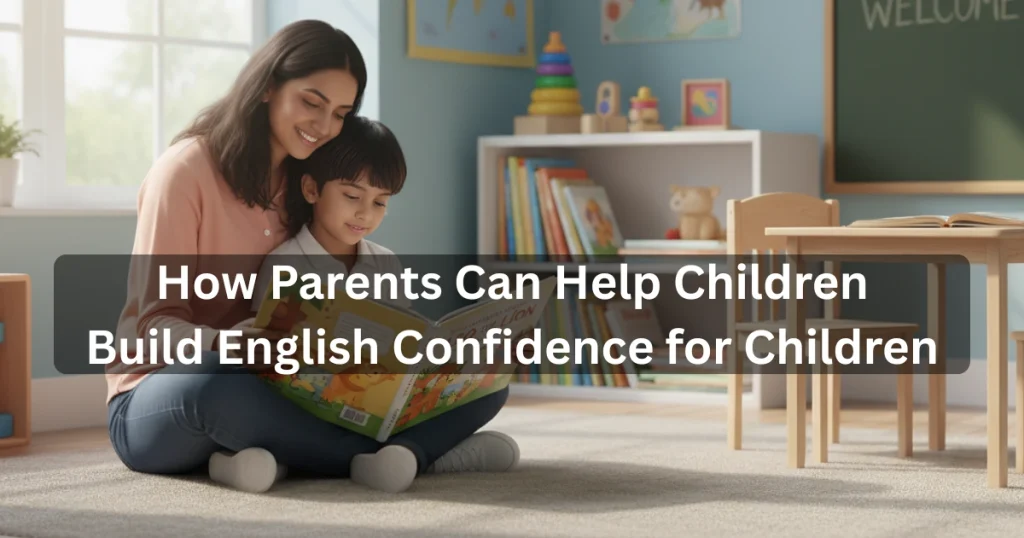
Simple steps parents can use to build English confidence for children Building strong speaking skills starts early and parents play the biggest role in helping build English confidence for children. At Col’s Calibre we work with many families every day and we see one clear pattern. When parents guide children with simple steps early the child grows faster with better fluency. In this blog we explain how you can support your child at home and help them build English confidence for children without pressure. 1. Why Early Learning Helps Build English Confidence for Children Children learn faster when they start early so parents should encourage small daily practice. When learning begins early children understand English pronunciation better and they remember vocabulary easily. This simple start helps them build English confidence for children naturally. Young learners grow fast because At Col’s Calibre we see that children who practise early show strong speaking habits. They respond faster during activities and they attempt new words bravely. As a parent you do not need to teach perfect grammar. Instead you should focus on basic speaking practice that slowly increases their fluency and spoken clarity. 2. Create a Supportive Home Space to Build English Confidence for Children A calm learning space helps children stay focused. Many children hold back from speaking because they worry about getting things wrong. When parents remove pressure the child feels safe so they begin to speak more. This positive setting slowly helps them build English confidence for children in a natural way. Keep the environment simple. Place books, charts or flashcards that use everyday vocabulary. When children see English around them they start connecting words with objects. This routine improves reading habits and enhances speaking comfort. Try to Children follow your energy. If you stay calm they will stay calm. If you become supportive they become confident. 3. Encourage Daily Conversations to Build English Confidence for Children Daily conversations matter more than worksheets. Many children understand grammar yet still hesitate to speak. The real issue is lack of practice. When parents speak English for at least ten minutes a day the child begins to use the same words. This daily rhythm helps them build English confidence for children step by step. Start simple Do not correct every small error. Instead repeat the correct sentence in a friendly tone. Children learn better when they hear the right version many times. This method helps vocabulary growth and improves natural fluency. 4. Use Stories and Reading Time to Help Children Speak Better Stories play a huge role in language development. Children love simple stories with colourful characters and exciting events. When they read daily they slowly improve vocabulary and sentence patterns. This regular activity helps them build English confidence for children in a fun and stress free way. Choose storybooks with short lines and simple words. Let the child read one page then you read the next. This cooperative reading builds trust and encourages active learning. Children understand grammar and meaning more clearly when they see it inside a story. Reading also builds imagination. Children who imagine more speak more because they think in full sentences. 5. Promote Speaking Through Fun Activities to Build English Confidence for Children Children learn faster when learning feels enjoyable. Fun activities inspire them to talk. This excitement helps them Grow English confidence for children even if they speak slowly at first. Try Roleplay is very effective because it pushes children to think and speak quickly. For example you can play shopkeeper and customer or teacher and student. When children speak without fear they develop strong fluency and good pronunciation. 6. Limit Screen Time and Use Only Purposeful English Content Screens affect attention so using them without control stops good learning. However suitable English content can support vocabulary growth. Parents should carefully select videos that teach simple conversation rather than only songs. This mindful choice helps them Grow English confidence for children at a steady pace. Show short clips that match the child’s age. After the video ask easy questions. Let the child answer without fear. This activity strengthens listening skills and builds strong sentence formation. When parents guide screen time well children make better progress. 7. Model Confident Speaking Habits to Build English Confidence for Children Children copy parents so your speaking style matters. If you speak English confidently they follow you. When you show excitement they feel excited too. This natural imitation helps them boost English confidence for children through everyday exposure. Do not worry about perfect grammar. Clear and simple sentences work best. When the child sees you using English during daily tasks they start doing the same. This habit builds fluency and confidence. Say short sentences like Regular use of small sentences improves listening and speaking skills at home. 8. Use Real Life Situations to Build English Confidence for Children Children learn best when they use English in real situations. Encourage them to speak during shopping travel or playtime. When they describe things around them their brain connects words to actions. This connection helps them develop English confidence for children with real understanding. Ask them to explain These quick tasks build thinking ability along with speaking skills. Real life practice also improves clarity and sentence structure because children use familiar words first then slowly expand. 9. Work With Simple Writing Practice to Improve English Confidence for Children Writing strengthens memory. When children write new words or small sentences they remember them better. Writing also supports speaking because children understand how words join together. This combined learning helps them improve English confidence for children gradually. Start with Encourage your child to note one simple sentence each day. This small habit strengthens their vocabulary and you will slowly see their confidence grow when they speak. 10. Partner With Learning Centres Like Col’s Calibre to Develop English Confidence for Children Many parents want expert support to guide their children. At Col’s Calibre we provide structured English learning that builds strong speaking habits. Our trainers use simple
How to Learn English: 5 Steps to Speak English Fluently

It was a calm Saturday morning. I’d just sat down with my tea at a café near the park. A familiar voice called out, “Sir! Do you remember me?” Of course I did. It was Ravi, one of my old students. He looked nervous but hopeful. “Sir,” he asked, “I’ve got an interview next month. Please tell me honestly… how to learn English in two months?” I smiled. I’ve heard that question a hundred times. “You can,” I said, “but you’ll have to do exactly what I tell you. Every day. No skipping.” He took a brief pause, then nodded with that quiet sort of certainty. I could see he meant every word. That short chat became the backbone of the plan I’m about to share here. A real one. Tried and tested in countless classrooms, cafés and coaching rooms. 1. Why Learning English Fast Feels So Hard Most people think English is difficult. It isn’t. What’s difficult is sticking to it. You see, people start with excitement. They buy notebooks, download apps, maybe join a class. A week later, life takes over and then the guilt sets in. “I can’t remember words.”, “I forget grammar.”, “I sound silly when I speak.”, “Can I learn English?” That’s fine. Everyone feels that way. You’ll see why in a bit. It’s not English that’s tricky, really. It’s how people approach it. Most people learn English to pass exams, not to actually use it. A British Council study found that practising even 15 minutes a day helps learners remember nearly three times more words than doing it once a week. And that’s why two months is enough, if you show up daily. Practice. Every single day. 2. How to Learn English with a Two-Month Roadmap That Actually Works Here’s how I usually break it down in class four stages, each lasting two weeks. Stage 1 (Weeks 1-2): Build Core Confidence Forget perfect grammar for now. The first two weeks are about getting your brain comfortable with English sounds and rhythm.Here’s what you do:Listen to English every day. Ten to fifteen minutes music, podcasts, short news clips. Repeat what you hear. Out loud. Even if you sound funny. Write three brief sentences to say how your day went. Anything. Spend five minutes talking to yourself while looking in the mirror. One student once told me, “Sir, I feel foolish talking to myself.” I said, “That’s fine. Speak anyway. You’re training your tongue, not your ego.”By the end of week two, he could describe his entire morning routine in English clearly and confidently. Confidence comes from doing. Not reading. Stage 2 (Weeks 3-4): Learn English Grammar That Actually Works Now you’ve found your rhythm. Let’s add structure. But here’s the thing, don’t get trapped by grammar books. You only need what helps you speak.Focus on:Simple tenses like past, present and futureEveryday questions (“What did you eat?” “Where are you going?”) Basic connectors (and, because, so, then)I always tell my students, “If you can use 100 grammar rules but can’t say a sentence, it’s useless.”Try the shadowing technique, listen to a short dialogue and repeat it in real time. At first, you’ll stumble. That’s fine. After a few days, your mouth catches up with your mind.From what I’ve seen in class, learners who practised for ten minutes daily picked up fluency quicker than the ones buried in grammar books. Stage 3 (Weeks 5-6): Training Your Mind to Think in English Now we move to vocabulary. The fun part. Don’t memorise lists. They vanish from your memory by the next morning. Learn English words from real life.If you cook, learn boil, chop, taste, pan. If you travel, learn ticket, traffic, driver, lane. Context sticks. Lists fade.I ask my students to make word maps. Begin with “work” and build a small cluster office, laptop, meeting, deadline. Each time you learn a fresh word, attach it to something you’ve learnt before.A nurse in one of my batches did this. She learnt 10-12 medical terms each week by linking them to real hospital routines. After two months, she could explain patient cases in fluent English.That’s how it happens, not through memorisation, but connection. Stage 4 (Weeks 7-8): Real Conversations and Feedback Now comes the part most learners skip, real conversations. This is where everything clicks.Try these:Partner with a friend or colleague for short daily chats. Join a spoken English group or class, online or offline. Record your 2-minute talk each day and listen again.You’ll notice your own mistakes. You’ll cringe a bit. Good, it means you’re becoming aware. I remember telling one of my groups, “Don’t wait for your teacher or friend to point it out. Be your own trainer.”They laughed, but they did it. Within two weeks, their tone and rhythm changed completely. Real growth comes from feedback not from silence. 3. Why This Plan Works When Others Don’t Traditional learning focuses on writing and grammar first. Speaking comes last. But language doesn’t quite work like that in real life.Children pick it up by listening first, then by speaking. Reading and writing come much later.Adults, on the other hand, start with books and rules no wonder it feels harder.In my own sessions, the group that spoke daily improved roughly twice as quickly as those buried in grammar books.The secret? Active usage.Our brain stores language through sound and emotion, not through rules. When you speak, you activate both.If you want structured practice like this, check out Col’s Calibre. The lessons there are built exactly around this active-learning method short, practical and daily. 4. Trainer’s Notes What Really Matters Here’s what I tell every learner before they start:You won’t feel confident before you speak. Confidence comes after you speak. Not before.Small, daily effort beats long weekly study. Even fifteen minutes counts as long as you do it every day. Don’t translate in your head. Think in actions and pictures instead of your native language.Sometimes I say, “Forget grammar. Talk like a child for a bit. They learn English fast because they don’t fear mistakes.” That